
Employee retention consulting is most useful before an organization is in obvious crisis mode. That is the whole point. Retention and performance problems rarely arrive waving a flag. They usually show up as an ordinary workday that feels a little off.
A top performer gets quieter in meetings. A manager starts carrying the entire team’s stress without saying so. An exit interview shocks HR or senior leadership, while the team around that person is thinking, yes, of course, we saw this coming. These are not random events. They are patterns.
And patterns are fixable.
If we want employee retention consulting to actually work, we need to stop treating attrition like a surprise and start treating it like an operational signal. That means noticing what is happening early, diagnosing the right problem, and acting with more precision than pizza parties and generic wellness messaging.
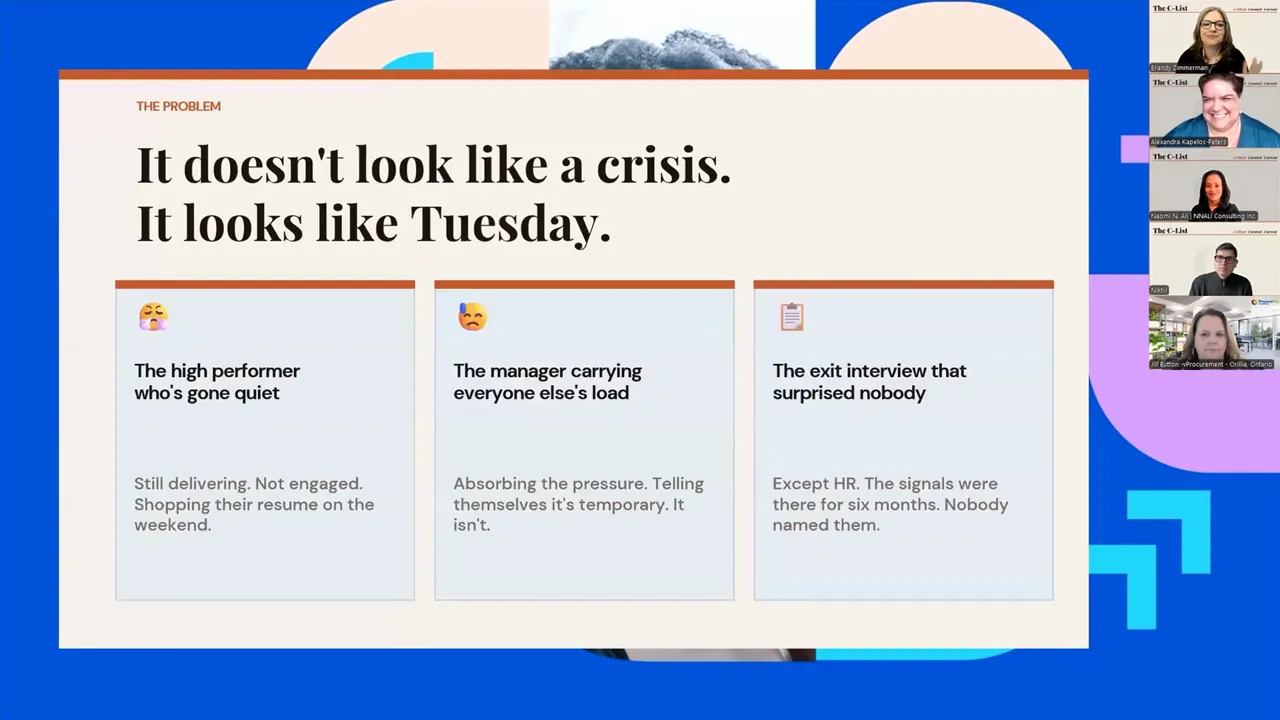
Table of Contents
- Retention problems usually look like a normal Tuesday
- The warning signs show up weeks or months before the resignation
- Why retention problems persist even when leaders care
- The cost of waiting is not neutral
- The three moves that actually help
- The one move to make this week
- When employee retention consulting makes the biggest difference
- Additional Resources
- FAQ
Retention problems usually look like a normal Tuesday
The earliest signals are easy to miss because they do not feel dramatic. Nobody is slamming a resignation letter on the table. Work is still getting done. Teams are still moving. On paper, everything can look stable.
But underneath that surface, a few very common patterns start to appear:
- A high performer begins to disengage and contributes less than usual.
- A manager quietly absorbs team pressure and assumes it will settle down after the current project.
- An employee leaves, and the departure feels sudden only to the people furthest from the day to day reality.
This is why employee retention consulting matters so much at the team level. The issue is often visible long before it becomes formal. The challenge is not that the signs are invisible. The challenge is that many leaders have not been trained to recognize them clearly, talk about them consistently, or respond in a way that fits the real problem.
The warning signs show up weeks or months before the resignation
When we look carefully, the signals are usually there well in advance. Not every team will show every sign, and this is not meant to be a rigid checklist, but these are some of the most useful patterns to watch for.
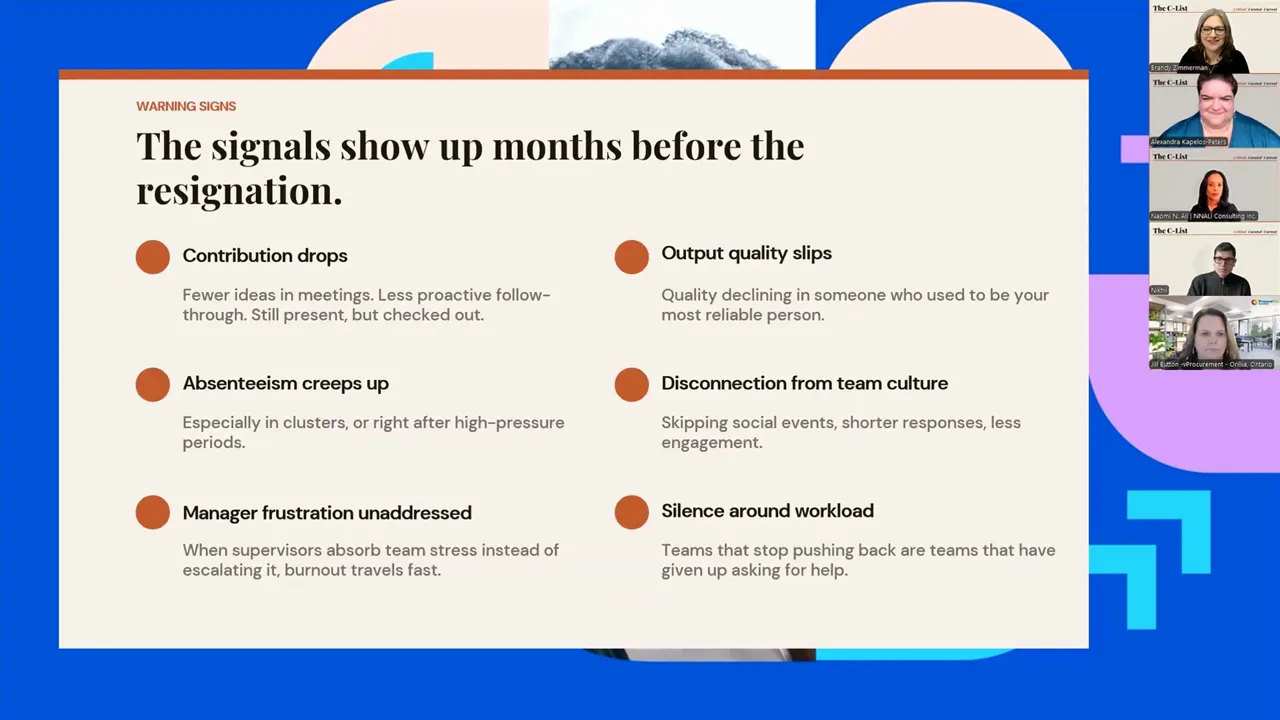
1. A drop in contribution
Someone who used to bring ideas to every meeting stops speaking up. They are still doing the job, but they are no longer investing in making the work better.
2. Slipping output quality
This is not one rough week. It is a pattern. Standards drift. Follow through gets less consistent. Attention to detail starts fading.
3. Absenteeism starts creeping up
You may notice more absences from an individual or across a department. This can become especially visible after a crunch period or after a leadership change.
4. Disconnection from the team
Responses get shorter. People skip moments that used to matter to them. Energy drops in team meetings, hallway conversations, and informal collaboration.
5. Managers absorb pressure without naming it
This is one of the most-missed signals. A manager takes on team stress, shields leadership from the reality, and tells themselves it is temporary. Then another deadline arrives, and another, and another.
6. Teams stop pushing back on workload
This one is especially important. Sometimes a team stops raising concerns not because the workload is fine, but because experience has taught them nothing will change. Silence is not always resilience. Sometimes it is resignation.
These are not soft, fuzzy signals. They are measurable, observable, and actionable. Good employee retention consulting helps leaders learn how to spot them early and what to do next.
Why retention problems persist even when leaders care
One thing worth saying plainly: most leaders do care. A lot. Employee retention consulting is not about scolding leaders for not trying hard enough. Usually the issue is not lack of intention. It is lack of tools, clarity, and precision.
Three patterns show up over and over.
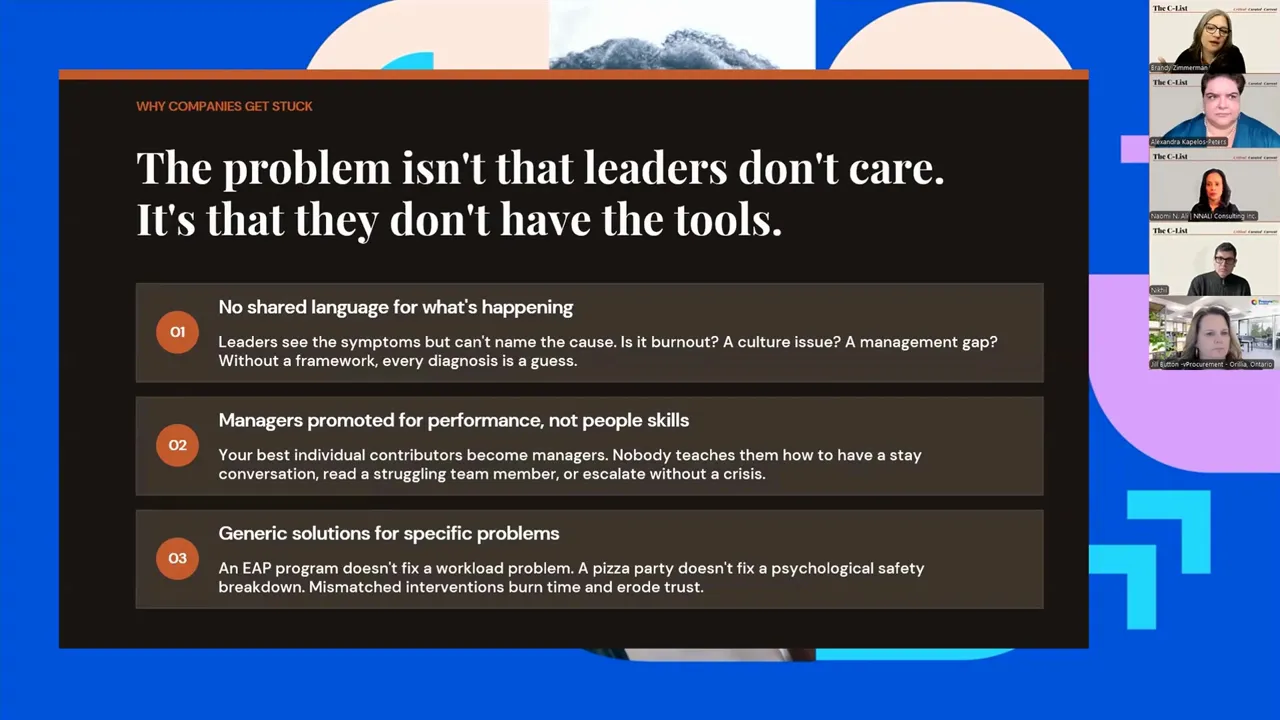
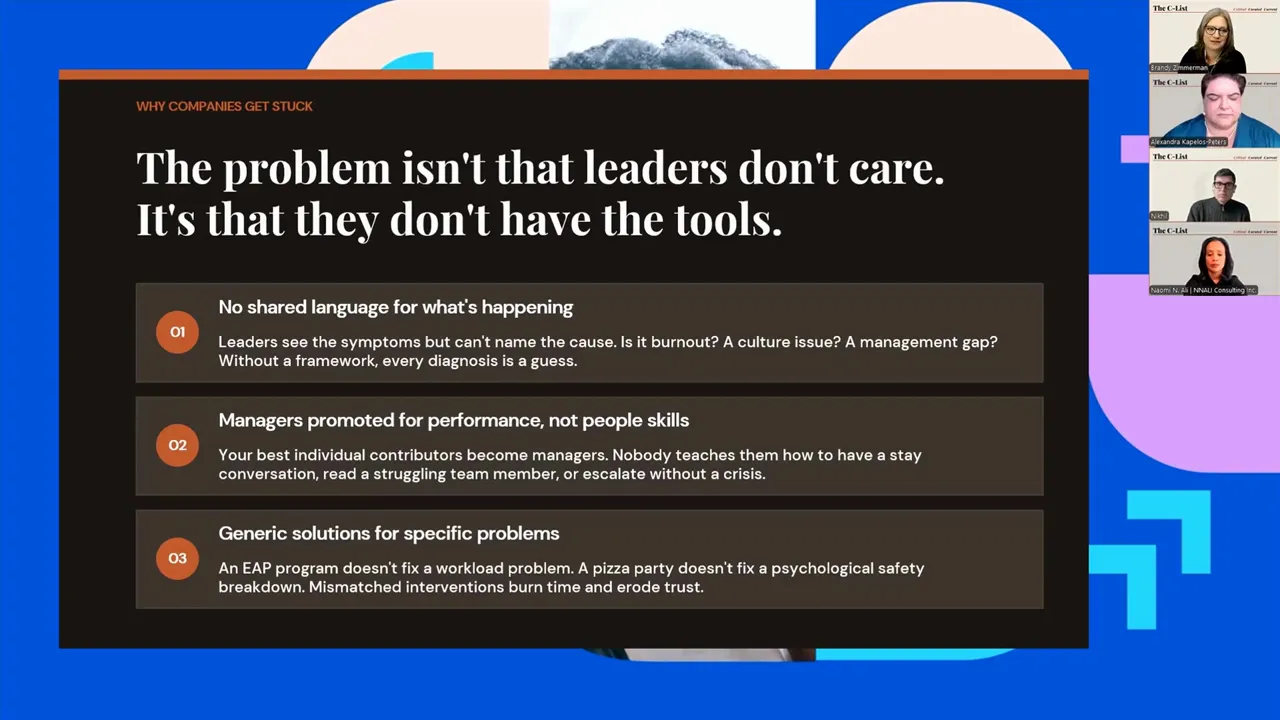
No shared language for what is happening
Leaders can often see symptoms, but they cannot agree on the cause. Is it burnout? A trust problem? A management gap? A communication issue? Without a shared framework, every leader interprets the problem differently, each team responds differently, and nothing sticks.
This is where structured support becomes valuable. A focused diagnostic process can save months of misfires. If that is where your organization is stuck, a business diagnostic can help clarify what is actually happening before more time and money are spent on the wrong fix.
Managers get promoted for performance, not people leadership
This happens everywhere.
The best engineer becomes the engineering manager. The top sales rep becomes the sales manager. A standout operator on the manufacturing floor becomes the supervisor. The promotion makes sense based on job performance, but nobody has necessarily taught that person how to read a struggling employee, how to have a stay conversation, or how to raise concerns before they turn into formal HR events.
Some situations absolutely do need formal escalation. Many do not. The missing piece is judgment and skill.
That is why employee retention consulting has to include manager capability, not just policy updates. If your managers need stronger support in this area, targeted leadership coaching can build the confidence and practical skill set they were never formally taught.
Generic solutions get applied to specific problems
This one is costly.
An employee assistance program is important, but it will not solve a workload problem. A pizza party may create a nice moment, but it will not repair broken trust. Broad morale gestures can even make things worse when people can see that leadership is trying to treat a structural issue like a vibe problem.
When organizations keep reaching for the wrong tool, they spend money, signal effort, and still change nothing. Over time, that does more damage to trust than doing nothing at all.
The cost of waiting is not neutral
One of the most common reactions to retention issues is, now is not the time. We just need to get through this project. This quarter is too packed. The board needs this done first.
That instinct is understandable, but waiting has a price tag.
Replacing a mid-level employee is expensive
Replacing a mid-level employee often costs between 50 percent and 200 percent of annual salary. That is not just recruiting fees. It includes:
- Lost productivity while the role is open
- Time spent onboarding and training
- The burden shifted onto everyone else in the meantime
- Institutional knowledge that leaves with the departing employee
New hires take time to ramp up
On average, a new hire can take about six months to reach full productivity. That means the business does not just absorb the departure. It absorbs a long recovery period as well.
Bad exits increase the risk of more exits
This is the one we too often underestimate. High performers who see a colleague leave badly can become two to three times more likely to leave themselves. Not necessarily because they were already planning to go, but because they just learned something important about how the organization handles pressure.
They saw what happens when things get hard. And the people with options are the people who act on that information fastest.
That is why attrition is not just a headcount problem. It is a performance problem, a momentum problem, and a leadership credibility problem all at once.
If you want a concrete way to put numbers around that impact, use the turnover cost calculator. It helps quantify the hidden cost of employee exits across recruiting, onboarding friction, lost productivity, and morale risk.
The three moves that actually help
The answer is not a giant HR transformation by next Tuesday. Most organizations need a smaller, sharper response. Effective employee retention consulting usually starts with three moves.
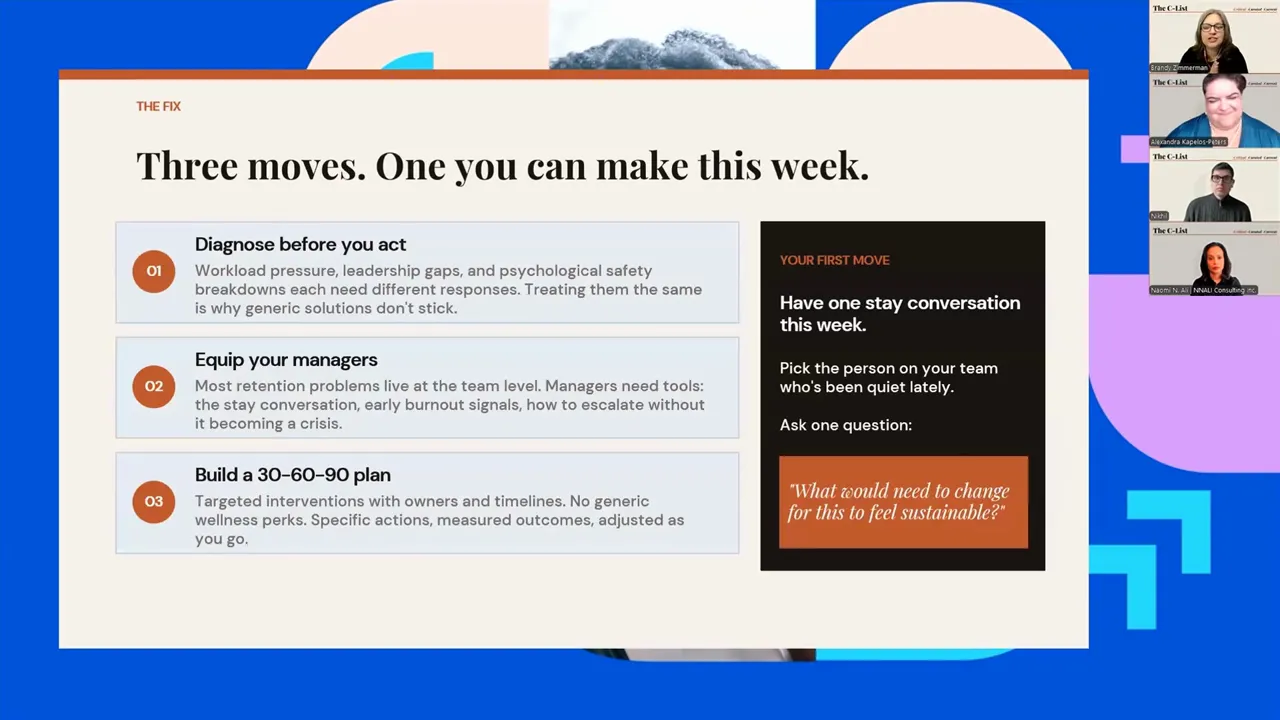
1. Diagnose before acting
Different problems need different responses.
- Workload pressure needs a different intervention than burnout.
- Manager capability gaps need a different intervention than trust breakdowns.
- Psychological safety issues need a different intervention than communication confusion.
A mismatched intervention wastes money, wastes time, and erodes trust because people can feel when leadership is solving the wrong problem. Employee retention consulting only works when diagnosis comes first.
2. Equip managers where retention actually lives
Retention lives at the team level. That means managers need specific, practical skills, including:
- How to have a stay conversation before someone has mentally checked out
- How to spot burnout, overwhelm, and workload fatigue
- How to raise a concern without turning it into a larger crisis than it needs to be
- How to connect people with support the organization already has
Managers should not have to guess their way through this.
3. Build a 30, 60, 90 day plan and keep going
We do not want random efforts and hope. We want targeted interventions with clear owners, realistic timelines, and ways to measure whether the situation is improving.
That means asking:
- What is changing in the next 30 days?
- Who owns each action?
- What should improve by day 60?
- How will we know by day 90 whether the response is working?
This is not a wellness announcement. It is a visible plan people can see, understand, and hold leadership accountable to.
Organizations looking for focused support on urgent business problems can also explore The C-List, where solutions are organized around real operational challenges, including retention and leadership issues.
The one move to make this week
If there is one action to take immediately, it is simple.
Think of one person on your team who has gone quieter lately. Someone who used to be engaged and active, but is not showing up the same way anymore.
Or think of the person whose exit would be a real problem. The one with very big shoes to fill.
Once you have that person in mind, book 20 minutes with them this week.
Ask them:
- What would need to change in our workplace for it to feel sustainable for you?
- What support do you need to do your job at your best?
Then listen.
Not fix. Not defend. Not explain why things are the way they are. Just listen.
When they answer, thank them.
That conversation is often where the real retention work begins. It is also one of the fastest ways to identify which lever actually matters.
When employee retention consulting makes the biggest difference
Employee retention consulting is especially useful when an organization can feel the strain but cannot yet name the cause with confidence. Maybe output is slipping. Maybe managers are overloaded. Maybe morale looks flat, but no one is sure whether the issue is workload, trust, leadership capability, or something else.
That is the moment to act.
Not because everything is on fire, but because it is not yet.
If you need help sorting through the messy middle of turnover, restructuring, and team performance, take a look at Brandy Zimmerman’s consulting profile. For broader business management support, you can also explore business management services or review how CANSULTA works to see how expert support is structured.
Additional Resources
- Book a Retention Reset clarity call
- Browse The C-List solutions hub
- SHRM offers broader HR guidance and workplace research that can help frame retention work in context.
- Gallup Workplace publishes ongoing research on manager impact, engagement, and employee experience.
FAQ
What is employee retention consulting?
Employee retention consulting helps organizations identify why people are disengaging or leaving, measure the real cost of attrition, and build targeted responses that improve retention and team performance.
What are the earliest signs of a retention problem?
Early signs often include quieter participation, slipping quality, increased absenteeism, team disconnection, managers absorbing pressure silently, and teams no longer speaking up about workload because they do not expect change.
Why do retention problems persist even when leaders care?
Because good intentions are not the same as having the right tools. Many leaders lack a shared framework, many managers were never trained in people leadership, and organizations often apply generic fixes to specific structural problems.
How much does employee turnover really cost?
Replacing a mid-level employee can cost between 50 percent and 200 percent of annual salary once recruiting, lost productivity, onboarding time, team strain, and lost institutional knowledge are included.
What is one practical retention action we can take right away?
Book 20 minutes with a team member who has gone quiet or whose exit would be especially disruptive. Ask what would need to change for work to feel sustainable and what support they need to do their job well. Then listen carefully without trying to solve everything in the moment.
Have this problem in your organization? |
|
One of our done-for-you, done-with-you, or do-it-yourself C-List solutions can help you fix it fast with a 3-4 week consulting sprint. |
| Book free Clarity Call |

